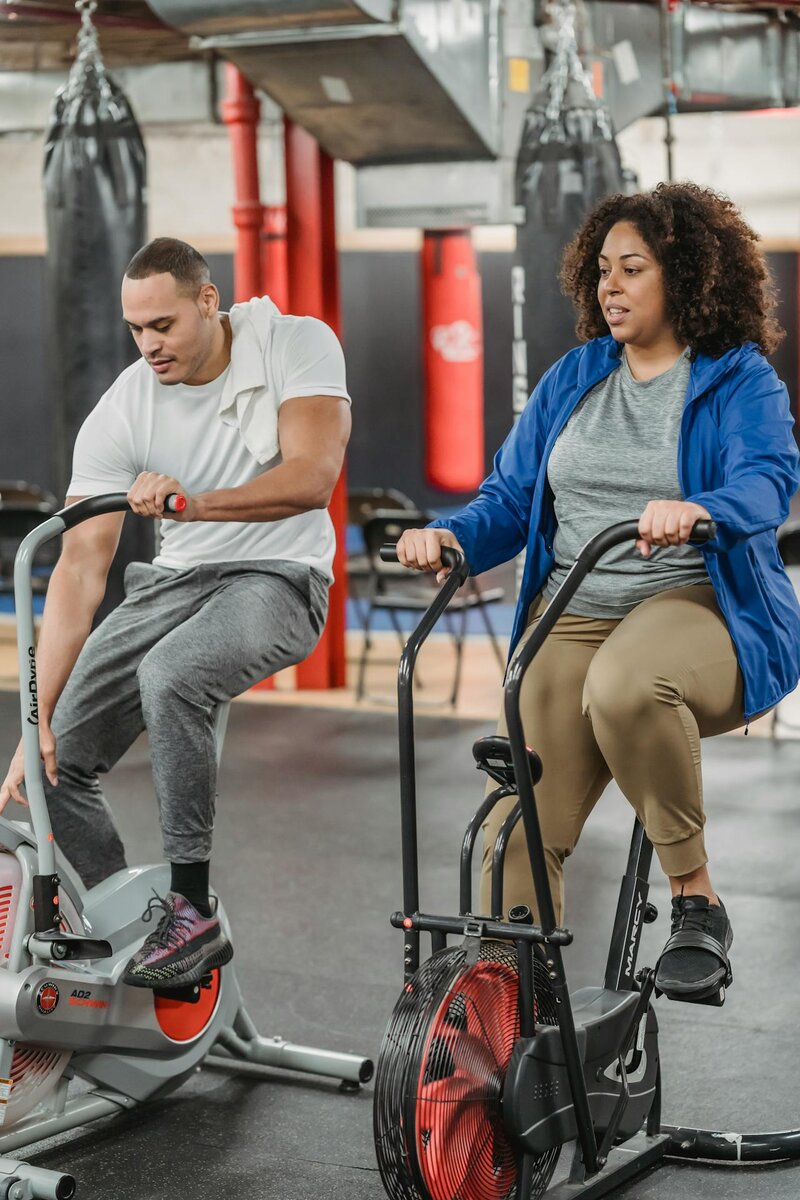
Stationary cycling exercise means pedalling on an exercise bike that stays in one place (usually at home or in a gym). It is also called indoor cycling, and it works well because you can control the speed and resistance, so it suits beginners and regular exercisers too.
If the goal is better fitness without joint stress, a stationary bike workout is one of the easiest routines to follow because it does not depend on weather, traffic, or road safety.
What Is Stationary Cycling Good For?
Stationary cycling is mainly used for cardio fitness (heart and lung fitness), daily calorie burn, and building a steady exercise habit. It is also a popular option for people who do not enjoy running, or who want something that feels easier on the knees and ankles.
The biggest benefit is consistency: when a workout feels simple and safe, it becomes easier to repeat, and repeatable workouts create the best results over time.
Benefits of Stationary Cycling Exercise
Below are the most important benefits, explained in simple words, with practical details that many blogs skip.
Better heart health and cardiovascular fitness
When you cycle regularly, your heart learns to pump blood more easily, and your breathing improves, so daily life feels easier. Many people notice they can climb stairs with less breathlessness after a few weeks of steady indoor cycling.
A simple way to measure this is the “talk test”: if you can talk in full sentences, the pace is easy; if you can talk in short sentences, it is moderate; if you can only say a few words, it is hard.
Low-impact exercise for joints
Cycling is called “low-impact” because there is no repeated pounding on the ground like running. The smooth, circular pedal motion is one reason stationary biking is often suggested as a joint-friendly way to stay active.
This does not mean it is “pain-free for everyone,” but it usually means less joint stress compared to high-impact workouts, especially when seat height and resistance are set correctly.
Stronger legs and better body support
Stationary cycling works big lower-body muscles: thighs, hips, glutes, and calves. Over time, legs feel stronger, and daily movements (walking fast, climbing stairs, carrying bags) feel easier.
When posture is steady (not slouching), indoor cycling also trains basic core support because the upper body stays stable while the legs work.
Stress relief and better mood
A steady cycling session often feels calming because it is rhythmic and repeatable. Many people find it easier to stay consistent when they pair cycling with music, a podcast, or a favourite show.
This “easy to stick with” factor is a big reason stationary cycling helps long-term fitness, not just short-term motivation.
How To Set Up Your Bike (Avoid Knee Pain)
Many beginners think cycling hurts their knees, but the real cause is often poor setup, heavy resistance too early, or bad footwear. A 5-minute setup check can make the workout feel completely different.
Seat height (most important)
A practical rule: when the pedal is at the lowest point, the knee should be slightly bent, not locked straight. Shimano’s indoor-cycling knee-safety tips highlight setup and fit as key factors for keeping knees comfortable.
If the seat is too low, many people feel pressure in the front of the knee; if the seat is too high, it can feel like the leg is over-stretching and the hips rock side to side.
Footwear (small detail, big impact)
Avoid cycling in slippers because feet can slip and the leg can twist slightly, which can strain the knee and ankle. A simple pair of sports shoes (even old ones) gives better grip and keeps the foot stable on the pedal.
Fan, water, and comfort
Indoor cycling can feel harder if the room is hot and air is not moving. A fan in front of the bike makes the session feel easier, helps you last longer, and improves consistency.
Keep water nearby, and start with a gentle warm-up so the body settles into the workout instead of feeling shocked.
How Many Calories Does Stationary Cycling Burn?
Calorie burn depends mainly on body weight, time, resistance, and how hard you pedal. Instead of chasing one “perfect number,” it is better to use a realistic range and focus on repeating the habit.
A realistic range (moderate effort)
PureGym notes that calorie burn varies by intensity and time, and gives typical ranges such as roughly 200–300 calories in 30 minutes at a moderate pace, and roughly 400–590 calories in 60 minutes (numbers vary by person).
If the pace is easy (full conversation possible), the burn is usually lower; if the pace includes short hard intervals, the burn is usually higher.
What increases calorie burn safely
The safest ways to burn more calories over time are:
- Cycle a little longer.
- Add a small amount of resistance.
- Add short “faster minutes” with easy recovery, instead of going hard for the full session.
Avoid the common mistake of increasing time and resistance in the same week, because that is when soreness and knee pain become more likely.
Is Stationary Cycling Exercise Good for Weight Loss?
Yes, stationary cycling exercise can support weight loss because it helps you burn calories and makes it easier to stay active regularly. The key is to combine cycling with a simple eating routine, because exercise alone often cannot “out-run” high-calorie snacks and sugary drinks.
A useful idea is a calorie deficit, which means burning more calories than you eat most days; when that happens consistently, weight slowly moves down.
A simple 4-week beginner plan
Week 1: 20 minutes, 4–5 days a week, easy pace.
Week 2: 25 minutes, 4–5 days a week, easy-to-moderate pace.
Week 3: 30 minutes, 4–5 days a week, moderate pace (short sentences).
Week 4: 30 minutes, 4–5 days a week, plus 2 faster days: 1 minute faster + 2 minutes easy (repeat 5 times).
This plan works because it builds the habit first, then adds intensity only after the body adapts.
Food basics (keep it realistic)
For weight loss, small changes work better than strict diets that feel impossible to maintain. Start with one or two changes that reduce daily calories without making you feel miserable, such as fewer sugary drinks, slightly smaller portions, and more protein foods that keep you full.
If cycling makes you very hungry, plan a simple post-workout meal (curd, eggs, dal, paneer, milk—based on your diet) so hunger does not push you toward snacks.
Knee Pain and Osteoarthritis: Is Indoor Cycling Safe?
Many people worry about cycling with knee pain, and that concern is valid. The Arthritis Foundation describes stationary biking as a helpful, low-impact activity for many people with joint concerns and arthritis, mainly because it keeps you moving without heavy impact.
Safety matters more than intensity here: start with low resistance, keep the motion smooth, and stop if pain is sharp or shooting rather than normal muscle tiredness.
If knee pain increases and stays worse the next day, reduce resistance and recheck seat height first, because setup issues are a very common cause of discomfort.
Common Mistakes Beginners Make (And Quick Fixes)
Mistake 1: Going too hard on day one
A hard first session often causes soreness, low motivation, and missed workouts. Start easy, build the habit, and increase slowly so the body adapts.
Mistake 2: Seat too low
A low seat can overload the knee. Adjust the seat so the knee stays slightly bent at the bottom of the pedal stroke.
Mistake 3: Cycling in slippers
Feet slip, knees twist, and small alignment problems turn into pain. Use shoes with a firm sole so the foot stays stable.
Mistake 4: No fan or poor ventilation
Heat makes the workout feel much harder than it is. Use a fan to make sessions more comfortable and repeatable.
Mistake 5: Expecting results in 3 days
Real change usually shows up after a few weeks of consistent work. Track progress using energy levels, breathing, and stamina, not only the weighing scale.
FAQs
Is 20 minutes of cycling enough?
Yes, if it is done consistently 4–5 days a week. A short workout done regularly is more useful than a long workout done once in a while.
Do I need an expensive exercise bike?
No. Comfort and consistency matter more than fancy features, especially in the first 4–6 weeks.
Can I watch TV while cycling?
Yes. If it helps you stay consistent, it is a smart habit because the time feels easier and passes faster.
Conclusion
Stationary cycling exercise is a simple way to improve cardiovascular fitness, burn calories, and build a routine that many people can follow long-term. With the right seat height, sensible resistance, and a realistic weekly plan, indoor cycling becomes comfortable, safe, and effective for beginners.